What is TwitChange?
The only global celebrity auction where Twitter users can bid to get three things: be followed by their favorite celebrity on Twitter, retweeted, or mentioned by them in a special tweet!
TwitChange raised half a million dollars to rebuilding Haiti with the use of celebrities and twitter! How they did this was auction things which usually aren't for sale but hold a ton of value for followers of celebrities. For example you could bid on your favourite celeb to re-tweet, mentions/tweets, and for them to follow you! This was done through an auctioning process through e-bay. Winners paid as much as $15,000 for a 'package' whereby they were re-tweeted, mentioned and followed. Celebrities ranged from Movie stars, Actors, Musicians, even businessman and athletes.
in my opinion this was an absolute genius way to raise money for a charity. They pretty much looked for value in the twitter world and capitlised on it.
Thursday, October 14, 2010

NEXT Fridays @ The LOFT!
Hello everyone! Decided to do a bit of my own advertising on my blog today - I hope you all don't mind!
I've been appointed to take care of online promotions for a brand new club opening every Friday night at The Loft Hotel in Melbourne. Check out the page and 'Like' it if you wish to receive regular updates and want to keep up to date with upcoming events!
http://www.facebook.com/pages/Melbourne-Australia/NEXT-Fridays-at-The-Loft/164892266856674

NEXT Fridays @ The LOFT! - Opening night 22nd OCT, hope to see you there!
I've been appointed to take care of online promotions for a brand new club opening every Friday night at The Loft Hotel in Melbourne. Check out the page and 'Like' it if you wish to receive regular updates and want to keep up to date with upcoming events!
http://www.facebook.com/pages/Melbourne-Australia/NEXT-Fridays-at-The-Loft/164892266856674
NEXT Fridays @ The LOFT! - Opening night 22nd OCT, hope to see you there!
Wednesday, October 13, 2010
SECONDARY audiences - The new age threat.
Julian Morrow of the Chaser outlines a new 'secondary audience' phenomenon in his talk at the 2009 Andrew Olle Media Lecture (http://www.abc.net.au/local/stories/2009/11/07/2735643.htm). He outlines the primary audiences reactions and secondary audience's reactions to satirical and controversial materials which have surfaced. Basically the primary audience refers to those who directly watch a specific piece of material and form judgment on it whether it be positive or negative. Then comes the secondary audience who hear about this piece of controversial material with the already held preconception that it is a negative piece of work (ie blown up by the media or negative word of mouth - which is more common than positive) and then go out of their way to view it ie. Youtube - and inevitably base a negative judgment on that and make a complaint. His main concern is erosion of free speech in the media due to the fear of offending the secondary audience or the non-intended audience)
After watching his speech it made me think of how marketing is directly linked to these types of new age issues. Indeed new media is a great way to get information across to a large proportion of people if its deemed appropriate to the masses, but what happens when it offends the non-intended purpose? For years great ad campaigns have stuck to those it matters to and offended others and its the way it has been for a long time.
The best and most extreme examples of this scenario is an ad by KFC a few months back showing a white Australian man in the middle of a West Indies section of a cricket game sharing a bucket of KFC chicken. The West Indies fans were rowdy until he offered them all a piece of KFC chicken. The intended purpose of that ad was to outline the 'crowd pleasing' nature of KFC chicken. However once this commercial was seen by Americans on Youtube and with the help of a Youtube 'news' show TheYoungTurks, they accused Australia about being racist and stereotyping black people and fried chicken.
As Australians, we know that was definitely not what the ad was trying to do. Firstly they were West Indies fans not black Americans and secondly, that type of stereotype doesn't even exist here. But at the end of the day KFC pulled the ad and made a public apology. Some argued that KFC as a US parent company has the responsibility to take these things into consideration and even though those stereotypes don't exist here in Australia.
With social media connecting more and more people together and word of mouth spreading like wild-fire, will this mean the demise of good quality ads? Will marketers have to become more sensitive towards the secondary audience, the non-intended audience and in effect dumb down their ads to keep everyone happy?
I'd like to hear your thoughts.
After watching his speech it made me think of how marketing is directly linked to these types of new age issues. Indeed new media is a great way to get information across to a large proportion of people if its deemed appropriate to the masses, but what happens when it offends the non-intended purpose? For years great ad campaigns have stuck to those it matters to and offended others and its the way it has been for a long time.
The best and most extreme examples of this scenario is an ad by KFC a few months back showing a white Australian man in the middle of a West Indies section of a cricket game sharing a bucket of KFC chicken. The West Indies fans were rowdy until he offered them all a piece of KFC chicken. The intended purpose of that ad was to outline the 'crowd pleasing' nature of KFC chicken. However once this commercial was seen by Americans on Youtube and with the help of a Youtube 'news' show TheYoungTurks, they accused Australia about being racist and stereotyping black people and fried chicken.
As Australians, we know that was definitely not what the ad was trying to do. Firstly they were West Indies fans not black Americans and secondly, that type of stereotype doesn't even exist here. But at the end of the day KFC pulled the ad and made a public apology. Some argued that KFC as a US parent company has the responsibility to take these things into consideration and even though those stereotypes don't exist here in Australia.
With social media connecting more and more people together and word of mouth spreading like wild-fire, will this mean the demise of good quality ads? Will marketers have to become more sensitive towards the secondary audience, the non-intended audience and in effect dumb down their ads to keep everyone happy?
I'd like to hear your thoughts.
Tuesday, September 7, 2010
This is my blog. I can say what I f***en like..... right?
Are people considered brands? Of course.
But the big question is, to what extent are you accountable to those who perceive the brand "you"? What exactly is the brand you intend to project and where do you cross the line between your brand perception and your personal life? For companies this is an easier task to manage than individuals. Companies strategically develop their brands through an internal/external marketing entity in order to be perceived a certain way. However what happens when a person becomes a well known brand? In essence they are the company and their actions control how their brand is perceived. On many occasions their brand only represents a certain aspect of themselves ie celebrities and athletes. Just recently, Australian swimmer Stephanie Rice posted a "homophobic slur" on twitter which read: "Suck on that f*ggots!" (most likely not intending to attach any homophobic connotations) following the Wallabies victory over South Africa. That statement itself is of course politically incorrect on all levels and would cause offense to some people who read it. Consequently Rice was dropped by luxury car sponsor Jaguar and her $100,000+ Jaguar XF that was given to her part of the sponsorship deal was confiscated.
Bad judgement on her behalf? Probably. In the heat of the moment she got "excited" and tweeted something inappropriate. I'm sure we've all blurted something inappropriate at the wrong time some time or another, however in Rice's case, she is a brand - a well known brand. Knowing she has sponsors with vested interests in their own brands, ie Jaguar, Davenport, Sunrice, there needs to be a constant awareness that everything she says in the public domain will be seen by everyone and if the wrong things are said it will be heard.. by many.
Were her tweets from her personal twitter account, which have no affiliations with anybody but herself inappropriate? It can be argued that the intended audience wasn't the public forum but to her close friends, and those who don't agree or take offense to what she says should just ignore it. Celebrities and sporting figures become role models and sometimes don't ask to be role models. Do they still have a responsibility to act accordingly and politically correct just to satisify everyone and make sure they don't offend anybody? Can't they just live their lives the way they want?
But the big question is, to what extent are you accountable to those who perceive the brand "you"? What exactly is the brand you intend to project and where do you cross the line between your brand perception and your personal life? For companies this is an easier task to manage than individuals. Companies strategically develop their brands through an internal/external marketing entity in order to be perceived a certain way. However what happens when a person becomes a well known brand? In essence they are the company and their actions control how their brand is perceived. On many occasions their brand only represents a certain aspect of themselves ie celebrities and athletes.
Bad judgement on her behalf? Probably. In the heat of the moment she got "excited" and tweeted something inappropriate. I'm sure we've all blurted something inappropriate at the wrong time some time or another, however in Rice's case, she is a brand - a well known brand. Knowing she has sponsors with vested interests in their own brands, ie Jaguar, Davenport, Sunrice, there needs to be a constant awareness that everything she says in the public domain will be seen by everyone and if the wrong things are said it will be heard.. by many.
Were her tweets from her personal twitter account, which have no affiliations with anybody but herself inappropriate? It can be argued that the intended audience wasn't the public forum but to her close friends, and those who don't agree or take offense to what she says should just ignore it. Celebrities and sporting figures become role models and sometimes don't ask to be role models. Do they still have a responsibility to act accordingly and politically correct just to satisify everyone and make sure they don't offend anybody? Can't they just live their lives the way they want?
I'd like to hear your thoughts.
Tuesday, August 31, 2010
So, there are plenty more phish in the sea!
We can't escape the fact that a company's name, sign, symbol/logo - whether be a shape or colour association - play an important part in forming brand relationships with their consumers. Visual interpretation of stimuli is what we do in order to engrain details in our memories for it to be recalled and recognised in the future. Visual branding as a means to reach customers and potential customers has been a tool used by companies for centuries to not only communicate a branding message, but to give itself an identity to effectively differentiate itself from its competitors.
The downsides to having any sort of brand identity exists an opportunity for that brand identity to be copied. Physical goods fall victim to this all the time when products are immitated with goods which are of inferior quality having a companys name,sign, symbol or logo attached to it in order to deceive the end user. These tactics are usually easily identified due to the nature of the inferiority of the counterfiet products and the visual quality.

However in an age where companies are utilising the internet to communicate their brands through websites and more recently, social mediums such as facebook and twitter, the risk of immitating or spoofing becomes a much bigger threat. The ease and power of technology allows just about anyone to set up a website, send an email, and effectively communicate a message. When a company's identity is frauduently used in order to create a 'fake' website or email with the intent to deceive and obtain personal information, it's called phishing.
Phishing has become a big problem for companies lately, especially those who deal with accounts and personal information such as financial institutions. More recently in Australia, about 50 Westpac customers fell victim to a phishing scam by divulging their account numbers and passwords to online fraudsters. They were sent emails with a link which diverted them to a phony Westpac website which elaoborately contained a Westpac symbol and the words "monthly security check". Luckily the bank's security system detected the fraudulent email and website and the scam was reported to police. The comprimised online accounts had been temporarily locked to block any illegal transactions while account holders had been telephoned to alert them of the scam.

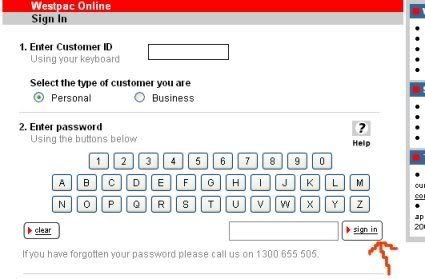
Currently there are lots of measures to prevent phishing through inbuilt security checks in web browsers and email services to filter out suspected fraudulent emails. Most financial institutions stress the importance of vigilance when dealing with online emails and state they never ask for personal information over the internet.
Do you guys think enough is being done to counteract phishing? Do you think people are educated enough about these sort of risks? As many older people are starting to use the internet who may not be as technologically aware as others, do you think some sort of formal education should be brought to light? I'd like to hear what you think.
The downsides to having any sort of brand identity exists an opportunity for that brand identity to be copied. Physical goods fall victim to this all the time when products are immitated with goods which are of inferior quality having a companys name,sign, symbol or logo attached to it in order to deceive the end user. These tactics are usually easily identified due to the nature of the inferiority of the counterfiet products and the visual quality.
However in an age where companies are utilising the internet to communicate their brands through websites and more recently, social mediums such as facebook and twitter, the risk of immitating or spoofing becomes a much bigger threat. The ease and power of technology allows just about anyone to set up a website, send an email, and effectively communicate a message. When a company's identity is frauduently used in order to create a 'fake' website or email with the intent to deceive and obtain personal information, it's called phishing.
Phishing has become a big problem for companies lately, especially those who deal with accounts and personal information such as financial institutions. More recently in Australia, about 50 Westpac customers fell victim to a phishing scam by divulging their account numbers and passwords to online fraudsters. They were sent emails with a link which diverted them to a phony Westpac website which elaoborately contained a Westpac symbol and the words "monthly security check". Luckily the bank's security system detected the fraudulent email and website and the scam was reported to police. The comprimised online accounts had been temporarily locked to block any illegal transactions while account holders had been telephoned to alert them of the scam.
Currently there are lots of measures to prevent phishing through inbuilt security checks in web browsers and email services to filter out suspected fraudulent emails. Most financial institutions stress the importance of vigilance when dealing with online emails and state they never ask for personal information over the internet.
Do you guys think enough is being done to counteract phishing? Do you think people are educated enough about these sort of risks? As many older people are starting to use the internet who may not be as technologically aware as others, do you think some sort of formal education should be brought to light? I'd like to hear what you think.
Tuesday, August 3, 2010
Saturday, July 31, 2010
Yes, another Iphone 4 post...
First post for the unit, I'll be talking about something which everyone is talking about. The iphone 4. In the past few weeks the media have brought to the attention of design flaws of the iphone 4's antenna which if covered in a certain area will cause signal loss which subsequently drops out calls. This has been a major PR disaster for Apple, especially during the launch period, as it has been the only thing dominating iphone news. Despite Consumer Report's testing of the iphone, many (and of course Apple) say that it has been blown way out of proportion and the number of actual dropouts related to the number of calls is a very minute number. Nevertheless it has made a significant impact to Apple management, forcing a conference to be held to try and help resolve this problem. Just a couple of weeks ago Apple announced a free bumper for every iphone 4 sold which has been proven to counteract the problem of signal loss.

What I find interesting throughout the course of these events is the way Apple and its Chief Executive, Steve Jobs is dealing with the immense uproar and blowup of the situation by the public and the media. Apple's brand image is now not only being tested but scrutinised to the finest detail.
Apple began blaming these problems on the consumer - apparently they were holding the phone wrong. Um ok - unless i'm lying on the floor, legs curled up behind my head with my phone between my asscrack, I don't think there IS a wrong way to hold a mobile phone. Then Apple began to preach about software glitches apparent in older iphone models which display a misleading amount of bars depending on its actual signal strength - obviously another poor excuse. Regardless of the display, the signal strength shouldn't be so low as to drop a call? Another fail whale attempt to divert the problem to a similar sounding problem which has nothing to do with core problem. Finally when tests were conducted which showed a hardware fault, Apple decided to admit to a hardware fault being present - but not without mentioning other brands having the same issues *rolls eyes*. Currently the free bandaid, i mean bumper is the only solution for the signal loss.
To me Apple and CEO Steve Jobs dealt with the situation horribly, not only underestimating the intellegence of today's consumer, but foolishly undermining it. Apple's arrogant approach does nothing but harm its brand image and takes away the perceived finer qualities and attributes of the brand, such as its superior innovative and design features. With that said, it's those finer qualities which is currently saving Apple's sorry ass. Not only are many consumers not phased by these findings, they are still lining up in huge masses in order to purchase one of them.
The only way Apple can make this situation right is by addressing the root of the problem and completely fixing the hardware and releasing a new version of the updated phone quicksmart. For apple to continuously maintain its strong brand image and dominant market share, they need to rid themselves of ANY flaws and continue to produce and market products of a superior quality perceived by the end users. Apple was lucky to have such a strong following but this has deteriated slightly due to these current events and the only way to safeguard its brand from suffering anymore is to make sure they address future issues more carefully.
What I find interesting throughout the course of these events is the way Apple and its Chief Executive, Steve Jobs is dealing with the immense uproar and blowup of the situation by the public and the media. Apple's brand image is now not only being tested but scrutinised to the finest detail.
Apple began blaming these problems on the consumer - apparently they were holding the phone wrong. Um ok - unless i'm lying on the floor, legs curled up behind my head with my phone between my asscrack, I don't think there IS a wrong way to hold a mobile phone. Then Apple began to preach about software glitches apparent in older iphone models which display a misleading amount of bars depending on its actual signal strength - obviously another poor excuse. Regardless of the display, the signal strength shouldn't be so low as to drop a call? Another fail whale attempt to divert the problem to a similar sounding problem which has nothing to do with core problem. Finally when tests were conducted which showed a hardware fault, Apple decided to admit to a hardware fault being present - but not without mentioning other brands having the same issues *rolls eyes*. Currently the free bandaid, i mean bumper is the only solution for the signal loss.
To me Apple and CEO Steve Jobs dealt with the situation horribly, not only underestimating the intellegence of today's consumer, but foolishly undermining it. Apple's arrogant approach does nothing but harm its brand image and takes away the perceived finer qualities and attributes of the brand, such as its superior innovative and design features. With that said, it's those finer qualities which is currently saving Apple's sorry ass. Not only are many consumers not phased by these findings, they are still lining up in huge masses in order to purchase one of them.
The only way Apple can make this situation right is by addressing the root of the problem and completely fixing the hardware and releasing a new version of the updated phone quicksmart. For apple to continuously maintain its strong brand image and dominant market share, they need to rid themselves of ANY flaws and continue to produce and market products of a superior quality perceived by the end users. Apple was lucky to have such a strong following but this has deteriated slightly due to these current events and the only way to safeguard its brand from suffering anymore is to make sure they address future issues more carefully.
Subscribe to:
Comments (Atom)